Traveling on highways in Portugal is convenient and fast, but requires payment for road use. It’s helpful to know what payment methods are available to avoid unnecessary stress and fines. Here is a complete guide to help you understand the highways in Portugal and how to pay for them.
Development of the highway network in Portugal
Portugal’s highway network is well developed and regularly upgraded. Major highways connect Lisbon with Porto in the north, Faro in the south, and other major cities such as Coimbra, Braga, and Aveiro. The highways are managed by various companies, such as Autoestradas do Atlântico, Autoestradas do Norte, and Auto-estradas do Litoral Centro, providing high quality service and systematic road maintenance.
Portugal's highway network
Portugal’s highway network is well developed and connected, covering most of the country. The highways connect cities, airports and other important transportation points, ensuring smooth traffic flow and rapid transport of people and goods.
Key highways in Portugal include:
Autoestrada do Norte (A1): This is the main highway connecting the capital, Lisbon, with Porto to the north. It is one of Portugal’s most important thoroughfares, enabling rapid transportation between the country’s two largest cities.
A3, A4, A5: Highways connecting the capital with nearby cities and industrial regions.
Autoestrada do Sul (A2): Running south from Lisbon, the A2 leads to the Alentejo and Algarve regions, famous for their beautiful beaches and sunny climate. It is a key highway for travelers heading to Portugal’s southern coast.
Autoestrada do Algarve (A22): This highway, also known as Via do Infante, runs along the southern coast, connecting the Algarve ‘s major cities and providing easy access to popular tourist destinations. It is an electronic highway.
Autoestrada do Oeste (A8 and A17): The A8 leads from Lisbon westward toward cities such as Caldas da Rainha and Leiria, while the A17 runs along the Atlantic coast, providing a quick connection to the Centro region.
Types of highways in Portugal
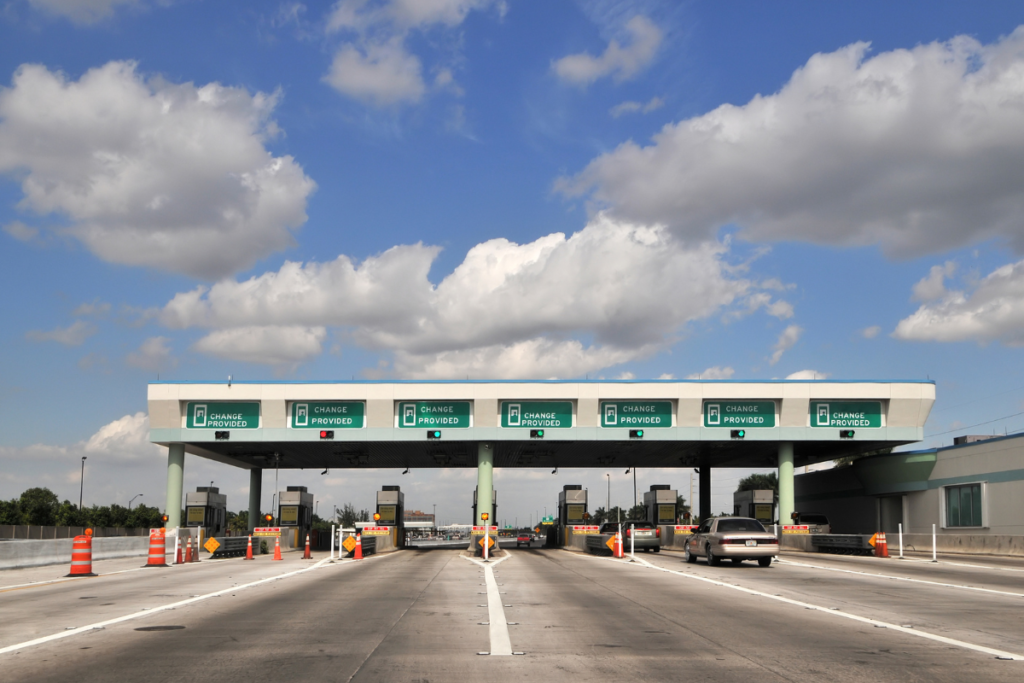
Portugal has two main types of highways: traditional highways with toll gatesand electronic highways, where tolls are collected automatically through electronic systems.
Gateway highways:
- On these highways, payment is made at traditional gates, where you can pay by cash or credit/debit card.
- Drivers collect an entry ticket at the entrance to the highway and pay the fee at the exit, where the ticket is scanned and the amount to be paid is calculated based on the distance traveled.
- Electronic highways:
- Tolls on these highways are collected automatically using electronic systems.
- There are no traditional gates on these roads, and the entire operation is carried out using cameras and sensors that record the crossings.
The cost of highway travel in Portugal
In Portugal, the cost of driving is calculated according to the kilometers traveled. To check the cost of the highway, you can use the trip simulator. The cost simulator is here >>.
Example travel costs for passenger cars on the sections:
- Lisbon – Faro: 23,50€.
- Lisbon – Porto: 21,95€.
Methods of payment for highways in Portugal
Portugal has a system of highway tolls that is operated by various road management companies. Tolls can be collected both in the form of subscriptions and based on kilometers traveled. Electronic systems, such as Via Verde, allow cashless payments, making travel easier for residents and tourists alike.
Payment at the Gates
Cash or card:
- At traditional gates, you can pay by cash (in euros) or credit/debit card.
- The cash registers are usually well marked and support many types of payment cards.
Via Verde:
- Via Verde is an electronic tolling system that allows payment without stopping at gates.
- Users must install a small device (transponder) in the vehicle, which is scanned when passing through special lanes marked Via Verde.
- Fees are automatically deducted from the bank account or credit card associated with the Via Verde account.
- In the case of rental cars, the device can also be rented often for an additional fee.
Payment on Electronic Highways
EasyToll:
- The EasyToll system is designed for foreign drivers. At EasyToll registration points (usually at the border), you can link your credit/debit card to your vehicle registration number.
- Tolls are automatically deducted from the card for each electronic highway trip.
TollCard:
- TollCard is a pre-paid card that can be purchased online or at points of sale (such as gas stations).
- The card is activated via SMS, and fees are deducted from the recharged balance.
- This is a great solution if you are traveling on foreign registrations.
TollService:
- TollService is an option for short-term users, offering a set number of days of unlimited travel on electronic highways for a one-time fee.
- This is convenient for tourists staying in Portugal for a short period of time.
For more information on electronic highway payments and to purchase a card and register your car, visit: www.portugaltolls.com/en.
Portugal highway tolls on foreign registrations
If you are traveling on foreign registrations, you can use the TollCard or EasyToll option, where you simply load the card and link it to your registration. Payments will be automatically debited from the card. For more information about tolls on Portuguese highways and the possibility of purchasing cards and registering your car, visit: www.portugaltolls.com/en
What if you don't pay your highway toll in Portugal?
Failure to pay highway tolls can result in financial penalties. Camera and sensor systems accurately record each trip, and failure to pay can lead to a fine, which is sent to the vehicle owner’s address.